Stop running mechanical, electrical and software as three projects.
The short version
- 01 Late surprises in machine builds cluster at the boundaries between disciplines.
- 02 Write requirements for the whole machine and give every interface an owner.
- 03 Co-simulation and hardware-in-the-loop testing let software meet the mechanics early.
- 04 One schedule and one accountable lead cost less than another prototype.
Walk into the engineering office of almost any machine builder and you can see the org chart in the floor plan. Mechanical engineers sit together around the big CAD screens. Electrical engineers are by the panel drawings. Software is in the corner with the headphones. Each group has its own schedule, its own reviews and its own definition of done.
Then the first prototype is assembled, and the schedule falls apart at exactly the places where those three groups meet.
The problems live at the seams
A motor sized by the mechanical team turns out to need a drive the panel has no room for. A sensor placed where it was easy to mount reads noise from a cable run nobody planned. The control software assumes a stiffness the frame does not have, so the axis oscillates at speed. None of these are failures of skill. They are failures of handover, because each discipline finished its part against assumptions the others never saw.
Every late change we tracked last year started at an interface, not inside a discipline.
What changes when it is one project
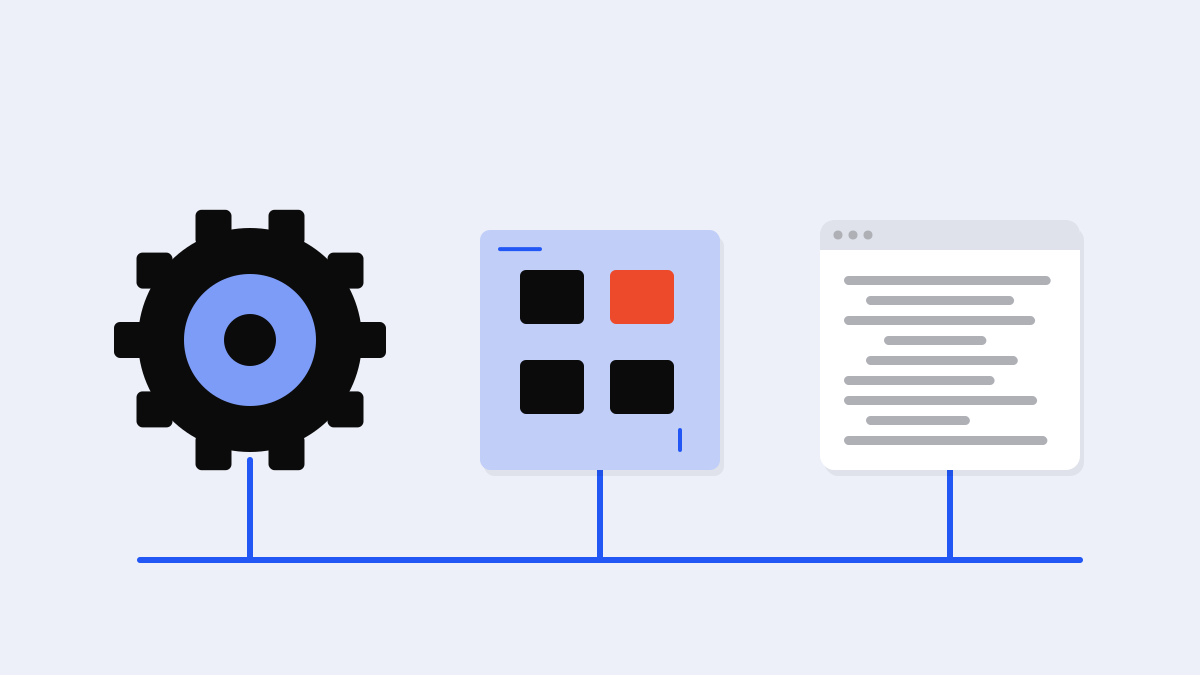
The fix is not a reorganization. It is treating the machine as one system with one set of requirements, and making the interfaces between disciplines first-class parts of the design. In practice that means a few habits:
- Write requirements for the machine, then split them, so every discipline traces its work to the same source.
- Name an owner for each interface: motor to drive, sensor to controller, frame to motion profile.
- Simulate early and together, even crudely, so control software meets a model of the real mechanics before it meets the metal.
- Test software against hardware-in-the-loop rigs while the frame is still being built.
It is a management decision
Engineers already know this. What usually stops them is a project plan with three swim lanes and three separate deadlines. A single integrated schedule, shared design reviews and one person accountable for the whole machine cost very little to set up. They are cheaper than a second prototype.
About the author
Helen Markham
Helen Markham edits the robotics and mechatronics desks. She spent nine years as a controls engineer integrating robot cells for contract manufacturers before she started writing about them, and she still reads a risk assessment before she reads a press release.
All stories by Helen 3 stories
Keep reading
More from
the newsroom.


Liked this?
Get five more.
For founders, engineers and operators who would rather read the spec sheet than the press release.
The Town Crier Free
Your week in industry, in five minutes.
One email on Wednesday morning. The stories worth your time this week, and nothing else.
No spam. Unsubscribe anytime.