Electric Truck Orders Hit a 2026 High as Diesel Tops $6 a Gallon.
The short version
- 01 September 2026 saw over 4,500 electric truck orders, the year's monthly high.
- 02 Diesel averaged $6.352 a gallon on October 26, up $2.63 in a year.
- 03 Commercial electricity averaged 14.47 cents per kWh in August 2026.
- 04 The federal 45W truck credit ended for vehicles acquired after September 30, 2025.
- 05 Charging, not the truck, is still the slowest part of most projects.
- 06 Pooled buying and fair-market-value leases shift residual-value risk off the fleet.
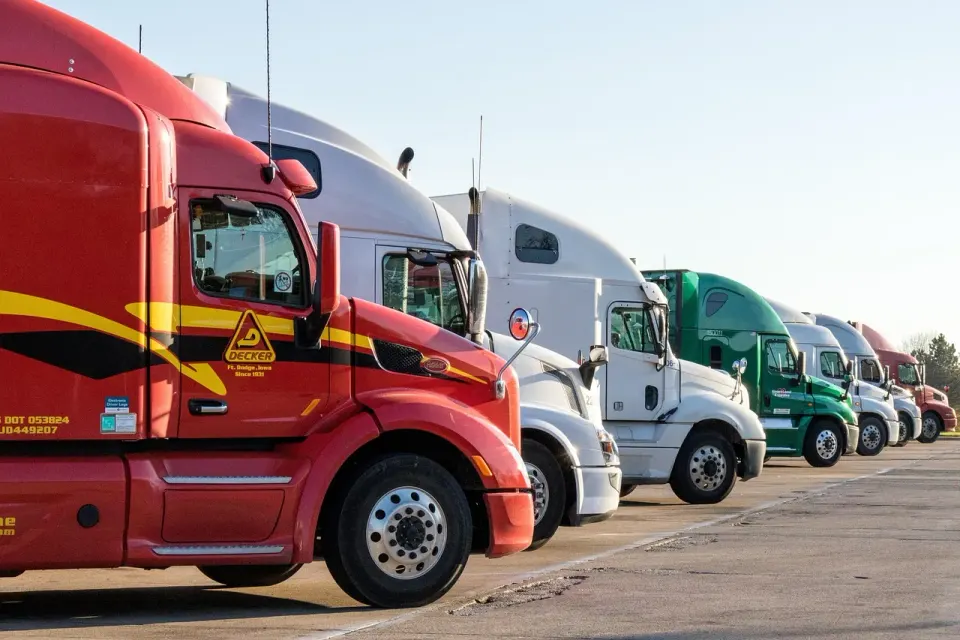
Electric truck orders hit their 2026 high in September, with more than 4,500 medium- and heavy-duty electric trucks ordered in one month. The trigger is simple math. U.S. diesel averaged $6.35 a gallon in late October, up $2.63 from a year earlier, while commercial power rose under a cent per kilowatt-hour.
Two deals carried most of that number. A pooled buy of 2,500 Tesla Semis for big shippers, and FedEx's order for 2,000 medium-duty delivery trucks from the startup Harbinger. Neither one came with a federal tax credit attached, which tells you how far the per-mile gap has moved.
This piece is for fleet owners, operations leads and investors who keep hearing about electric truck orders and want to know whether the numbers hold for a smaller operation. Tech Business Town covers industrial and emerging tech for people who have to sign the purchase order, so we stick to the figures that decide the deal: fuel cost per mile, charging, financing and residual risk.
What drove electric truck orders to a 2026 high?
Electric truck orders jumped because big buyers organized their demand and diesel made the case for them. The Environmental Defense Fund counted more than 4,500 medium- and heavy-duty electric vehicles ordered in September 2026, the largest monthly total of the year. Two announcements accounted for most of that figure.

The bigger one is ZET SCALE. Catalyst Mobility (the group formerly known as CALSTART) and the Smart Freight Centre pooled freight volume from shippers including Microsoft and PepsiCo, then ran an open request for proposals. Tesla won the first tranche of 2,500 Class 8 trucks. According to the ZET SCALE program announcement, that single order nearly doubles the U.S. electric Class 8 fleet. The alliance's stated long-term goal is 10,000 or more trucks across 10 freight hubs, from Southern California to Northern New Jersey.
The second is FedEx. The parcel carrier ordered 2,000 medium-duty electric chassis from Harbinger in a deal worth about $300 million, as TechCrunch reported on September 30. FedEx already runs 53 Harbinger trucks, and deliveries of the new batch are due by the end of 2027.
The counterpoint matters. Orders are not deliveries. A purchase order announced in September can still slip on production capacity, financing or the chargers that have to be ready when the trucks show up.
How diesel at $6 changes electric truck math
Fuel is the line item that moved. The U.S. Energy Information Administration (EIA) put the national average on-highway diesel price at $6.352 a gallon for the week of October 26, 2026, per its weekly gasoline and diesel price survey. That is $2.634 above the same week in 2025. The West Coast averaged $7.33.
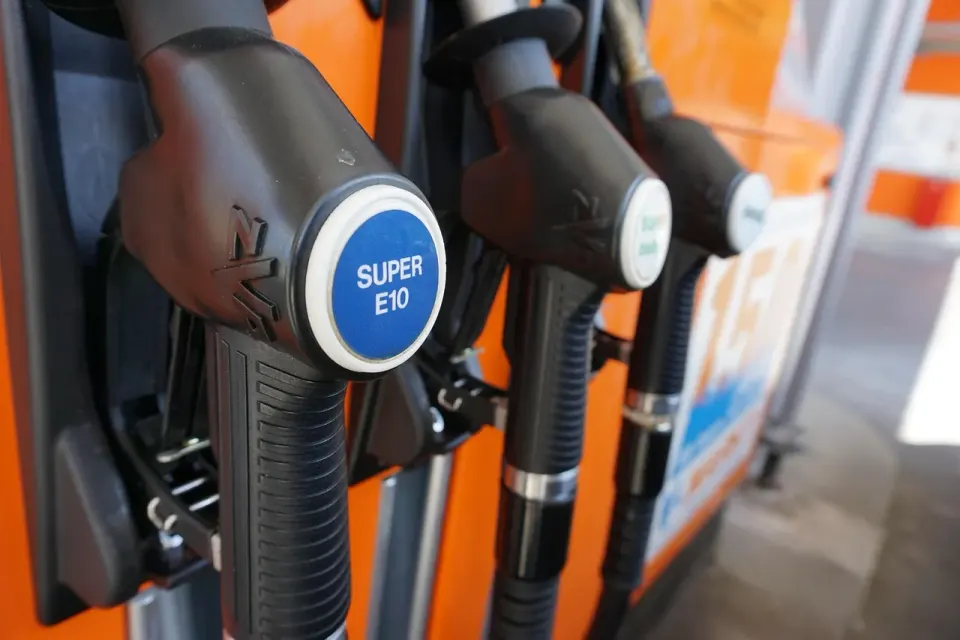
Truck efficiency turns that price into a cost per mile. The Department of Energy's Alternative Fuels Data Center (AFDC) lists a Class 8 truck at about 6.3 miles per gallon in its average fuel economy by vehicle category chart. We round that to 6.5 mpg for a diesel tractor, since the AFDC figure is stated in gasoline-gallon equivalents.
Electricity barely moved over the same year. The EIA's Electric Power Monthly retail price table shows the U.S. commercial average at 14.47 cents per kWh in August 2026, up from 13.87 cents a year earlier. Industrial customers paid 9.64 cents. State spreads are wide: Texas commercial power ran 8.96 cents, California 30.02 cents.
The table below compares energy cost per mile. It assumes 2.0 kWh per mile for an electric tractor, a conservative planning figure, and 100,000 miles a year. These are Tech Business Town's worked numbers, not a manufacturer claim.
| Scenario | Energy price | Cost per mile | Cost per 100,000 miles |
|---|---|---|---|
| Diesel, October 2025 | $3.718 per gallon | $0.57 | $57,200 |
| Diesel, October 2026 | $6.352 per gallon | $0.98 | $97,700 |
| Electric, Texas commercial | 8.96 cents per kWh | $0.18 | $17,900 |
| Electric, U.S. commercial average | 14.47 cents per kWh | $0.29 | $28,900 |
| Electric, California commercial | 30.02 cents per kWh | $0.60 | $60,000 |
At the national commercial rate, the electric tractor saves about $0.69 a mile on energy. That is roughly $68,800 a year on a 100,000-mile duty cycle. A year ago the same comparison saved about $0.29 a mile.
Two caveats keep the table honest. Retail averages leave out demand charges, which bill a depot for its peak draw and can swamp the energy rate at a site that charges many trucks at once. California also shows the gap can nearly close where power is expensive and chargers run on public rates.
Charging is the slowest part of an electric truck order
Charging is where most electric truck projects stall. A truck can arrive in months, but a depot that needs new utility service can take far longer. The AFDC's guide to developing charging infrastructure tells site hosts to engage the utility early to confirm power capacity.
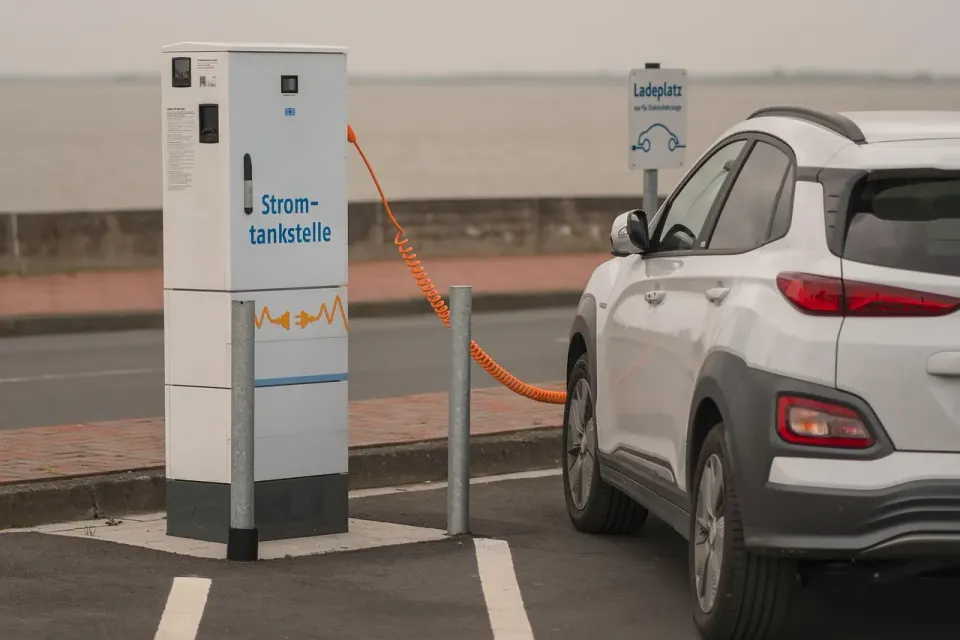
The same AFDC guide prices a DC fast charger at $38,000 to $90,000 per connector, plus $20,000 to $60,000 per connector to install. Heavy-duty sites that serve tractors at high power tend to sit at or above the top of that range. Per-charger costs drop as a site gets bigger, which is part of why pooled programs look at hubs rather than single yards.
Public money for big truck sites exists but moves slowly. In January 2025 the Department of Energy announced $68 million for SuperTruck Charge projects. That included $26 million for a site in Barstow, California on Interstate 15 and $20 million for an Interstate 10 site in Arizona. The Department of Energy noted those selections were not final funding commitments and depend on future appropriations.
Our read at Tech Business Town is that a fleet should treat the charger timeline as the project timeline. If the utility needs a new transformer, the truck order date matters far less than the energization date.
Who carries the risk when the federal credit is gone?
The fleet carries more of the risk now, unless a lease or pooled program takes it on. The federal commercial clean vehicle credit, known as 45W, paid up to $40,000 for trucks over 14,000 pounds. It no longer applies to vehicles acquired after September 30, 2025, so every 2026 order is priced without it.

The Internal Revenue Service (IRS) spells out that cutoff on its commercial clean vehicle credit page, which ties the change to the 2025 tax law. A vehicle placed in service after that date still qualifies only if it was acquired by September 30, 2025. For most fleets buying today, that means no credit at all.
Residual value is the other open question. Nobody has a long record of what a five-year-old electric tractor sells for. ZET SCALE answers that with a fair-market-value lease from ZET Financial, which the program says removes residual-value risk from the fleet operator. A small carrier buying outright gets no such cushion.
Pricing the whole system before signing is the same habit behind our guide to running a cobot risk assessment before you buy. The unit price is the easy part. The site work, the utility and the resale value decide whether the deal pays.
A five-step check before your own electric truck order
Here is the order of operations we would follow before committing to electric trucks in 2026.
- Pull 90 days of route data and find the runs under 250 miles that return to base.
- Get a written capacity answer from the utility for the depot, with a date.
- Price energy on your actual tariff, including demand charges, not a state average.
- Compare a cash purchase against a lease that carries residual-value risk.
- Check whether a pooled program serves your freight hub before buying alone.
Route data comes first because it is free and it rules trucks in or out. A regional run that ends at the same yard each night is the easy case. A long-haul lane that depends on public charging along the way is still the hard one.
Medium-duty work is often the easier first step. A delivery chassis like the ones FedEx ordered runs shorter routes, draws less power and can usually charge overnight on slower equipment. That lowers both the charger bill and the utility ask. Many fleets start there, learn their real energy use per mile, and then decide whether Class 8 tractors make sense.
What the electric truck order surge means for your fleet
The September surge in electric truck orders is real, and diesel at $6.35 a gallon explains most of it. At national average power prices, an electric tractor now saves close to 70 cents a mile on energy. That gap was about 29 cents a year ago.
The practical next step is a utility call, not a dealer call. Get the depot's power answer in writing, price it on your real tariff and compare a lease against ownership. If those three numbers work, the truck is the easy part.
Fact-checked as of October 30, 2026 against EIA price data and IRS guidance.
Why did electric truck orders jump in September 2026?
Is there still a federal tax credit for electric trucks in 2026?
How much cheaper per mile is an electric semi than diesel right now?
What is the biggest delay in switching a fleet to electric trucks?
About the author
Sam Osei
Sam Osei covers EVs and mobility. He came to journalism from fleet operations, where he planned the depot charging for a regional delivery business, and writes for the people who have to make the numbers work on a Monday morning.
All stories by Sam 2 stories
Keep reading
More from
the newsroom.



Liked this?
Get five more.
For founders, engineers and operators who would rather read the spec sheet than the press release.
The Town Crier Free
Your week in industry, in five minutes.
One email on Wednesday morning. The stories worth your time this week, and nothing else.
No spam. Unsubscribe anytime.